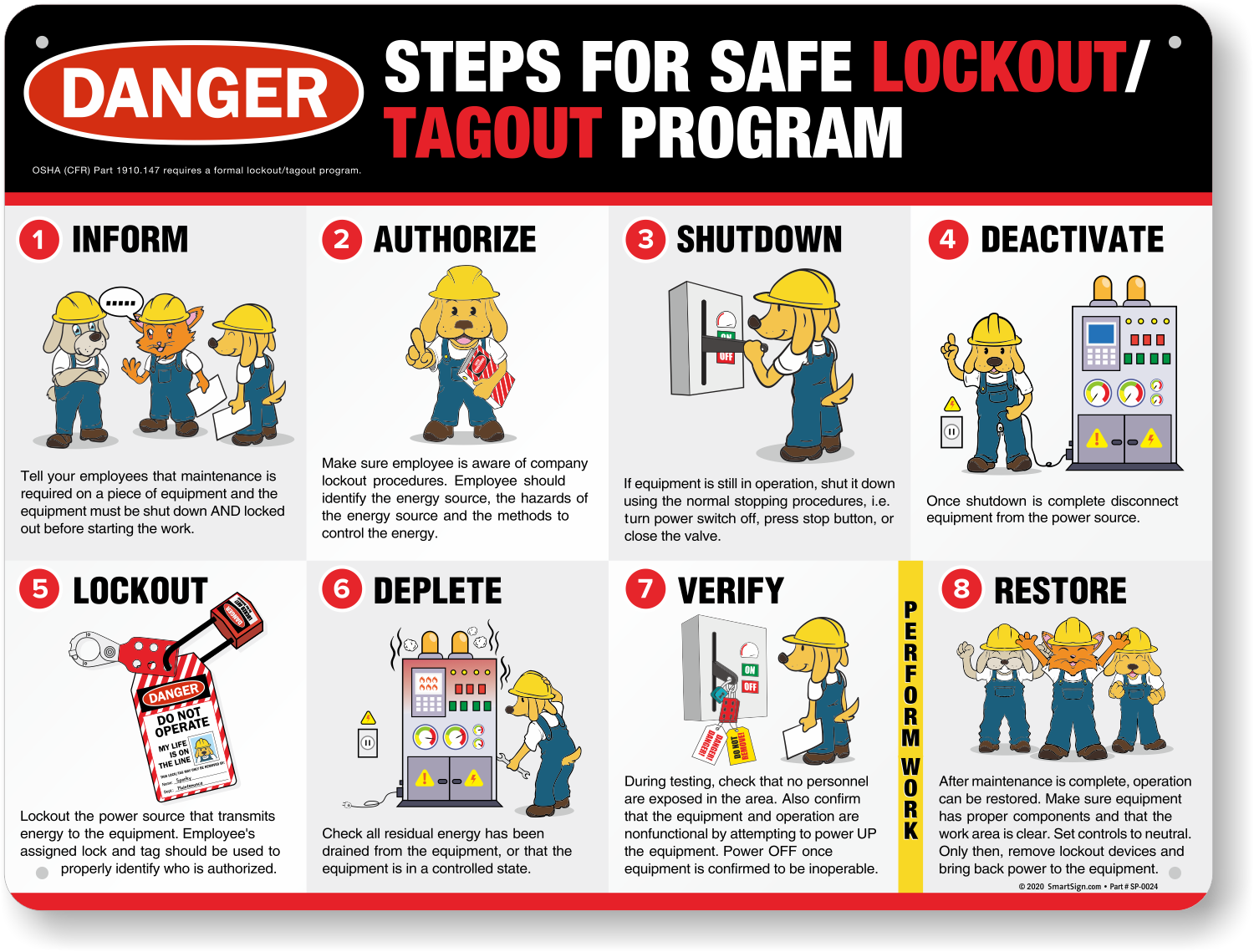
Most standard padlocks fail when it comes to lockout tagout (LOTO). They may look strong, but they often lack the durability, key control, or tamper resistance needed to isolate hazardous energy sources. Using the wrong lock during maintenance isn’t just risky—it’s a direct violation of OSHA 1910.147. The right locks for lockout tagout must do more than simply close. They need to prevent unauthorized access, withstand environmental stress, and integrate seamlessly with tagout procedures.
A failed lock means a failed safety procedure. And in high-risk environments—like manufacturing, utilities, or chemical plants—that’s a recipe for injury, downtime, or worse.
What Makes a Lock Suitable for LOTO?
Not every padlock labeled “safety” qualifies as a true lockout device. To be effective, locks for lockout tagout must meet several critical criteria.
1. Non-Conductive & Durable Materials Metal locks conduct electricity. In electrical lockout applications, that’s a death trap. Ideal LOTO locks are made from non-conductive materials like nylon, polycarbonate, or reinforced plastics. These resist corrosion, UV exposure, and chemicals—common threats in industrial settings.
2. One-Key Control Systems LOTO programs rely on accountability. Each worker must use their personal lock. One-key control ensures that a single key only opens one lock—eliminating master key risks. This supports the “one person, one lock” standard and prevents bypassing procedures.
3. Shackle Design Matters Look for locks
with:
- Long, straight shackles to fit through multiple energy isolation points
- Corrosion-resistant coatings (e.g., brass or stainless steel)
- Shackle lengths between 1.5” to 2.5” for broad compatibility
A short or curved shackle might not reach the lockout point on a circuit breaker or valve.
4. Visual Recognition Features Color-coding and labeling allow quick identification. Red locks for electrical, yellow for mechanical, blue for pneumatic—this visual language speeds up audits and reinforces accountability. Many safety locks include space for worker names or ID numbers.
5. Tamper Resistance & Security True LOTO locks should resist picking, forced entry, or accidental unlocking. Features like dual-ball bearing locking mechanisms or reinforced shackles prevent manipulation. Some models even include breakaway features—designed to fail safely under extreme force without releasing the mechanism.
Top 5 Locks for Lockout Tagout: Real-World Picks
Not all safety locks are made equal. Based on field performance, compliance alignment, and durability, these five models stand out.
| Brand & Model | Material | Shackle Length | Key Control | Best For |
|---|---|---|---|---|
| Brady BMP28 | Reinforced Nylon | 2” | One-key | General industrial use |
| Master Lock 1500iDAT | Polycarbonate | 1.75” | Keyed Alike (configurable) | Electrical panels |
| Grainger Everlube 5211K4 | Brass-Coated Steel | 2.5” | One-Key | High-heat environments |
| SLP LOTO-1 | High-Impact Plastic | 2” | One-Key | Multi-energy isolation |
| Honeywell RS2500 | Thermoplastic | 1.5” | Keyed Different | Confined space entry |
Why These Models Work

- Brady BMP28: Lightweight and bright red, this lock is a staple in plants following strict visual management. Its long shackle fits most circuit breakers and valve stems.
- Master Lock 1500iDAT: Popular in facilities with digital key tracking. The iDAT system logs who applied the lock—adding audit trail capability.
- Grainger Everlube 5211K4: Withstands temperatures up to 250°F. Ideal for boiler rooms or foundries where standard plastic locks would warp.
- SLP LOTO-1: Designed for group lockout scenarios. Ships with built-in hasp compatibility and dual locking points.
- Honeywell RS2500: Compact but rugged. Frequently used in utility maintenance where space is tight but safety standards are high.
These aren’t just “safety-colored” padlocks. They’re engineered for specific failure points in real-world LOTO workflows.
Common Mistakes When Choosing LOTO Locks
Even experienced safety managers make errors when selecting locks for lockout tagout. Avoid these pitfalls:
Using Locks with Master Keys Master key systems defeat the purpose of personal accountability. If one key opens every lock, any worker can remove another’s device. OSHA requires individual control—meaning each employee must have a unique lock and key.
Ignoring Environmental Factors A lock that works in a clean room may fail in a washdown area. Moisture, chemicals, and temperature swings degrade inferior materials. Always assess location-specific risks before choosing locks.
Overlooking Shackle Clearance A lock might “fit” on paper but fail in practice. Measure the clearance around valves, disconnects, and energy isolation points. A 1.5” shackle might not clear a thick hinge or dual-valve setup.
Mixing Lock Types Across Departments Inconsistency invites confusion. If maintenance uses red plastic locks but operations use metal ones, it breaks visual standards. Standardize across teams—even if it means replacing older stock.
Skipping Training on Lock Use A high-end lock is only as good as the person using it. Workers must understand not just how to apply a lock, but why—including the risks of improper placement or shared keys.
How to Integrate LOTO Locks Into Your Safety Workflow
Purchasing the right locks is only step one. To make them effective, they must be embedded in a repeatable, auditable process.
1. Conduct an Energy Source Audit Walk through every machine and identify all energy types: electrical, hydraulic, pneumatic, thermal, gravitational. Each needs a unique lockout point. Document locations and required lock specs.
2. Standardize Lock Kits by Role Create pre-packed kits for common tasks:
- Electrician Kit: Red non-conductive lock, tag, test meter
- Mechanic Kit: Yellow long-shackle lock, valve lock, tag
- Group Lockout Kit: 6-padlock hasp, master lock, checklist
Pre-assembled kits reduce errors and save time during shutdowns.

3. Enforce the “One Person, One Lock” Rule No exceptions. Even if a task takes five minutes, the worker must apply their personal lock. Supervisors should never carry “spare” keys to bypass locks.
4. Perform Monthly Audits Check locks for:
- Physical damage
- Missing or faded tags
- Unauthorized modifications
- Key duplication attempts
Use findings to reinforce training or update standards.
5. Replace Locks Proactively LOTO locks aren’t lifetime devices. Replace any
with:
- Cracked housings
- Stiff or sticky keys
- Corroded shackles
- Faded labels
A failed lock during a reset could mean catastrophic re-energization.
Beyond the Lock: Pairing with Tags and Devices
Locks for lockout tagout don’t work alone. They’re part of a broader energy control system.
Tags Provide Critical Information A lock shows that a device is locked. A tag explains why, who, and when. OSHA requires tags to include: - Employee name - Department - Date and time of lock application - Reason for lockout
Use tamper-resistant tags with weatherproof printing. Never rely on handwriting alone.
Use Lockout Hasps for Group Isolation When multiple workers service one machine, a single lock isn’t enough. A hasp allows each person to apply their lock to a common point. Only when all have completed work and removed their locks can the system be re-energized.
Match Locks to Energy Isolation Devices
- Circuit Breakers: Use breaker lockouts with integrated padlock points
- Valves: Use valve lockout devices that immobilize handles
- Pneumatic Lines: Use plug-style locks with padlock slots
- Push Buttons: Use guard covers that accept padlocks
The lock itself is just the final step. The real protection comes from the full isolation method.
Key Takeaways for Choosing and Using LOTO Locks
The best locks for lockout tagout are more than hardware—they’re enforcement tools for safety culture. Choose models that are non-conductive, tamper-resistant, and visually distinct. Standardize across your site, train rigorously, and audit consistently. Remember: a lockout procedure is only as strong as its weakest link. That often starts with the lock.
Prioritize durability over cost, individual control over convenience, and integration over isolation. When your LOTO locks are part of a living system—not just a compliance checkbox—you create a workplace where safety is automatic, not accidental.
Frequently Asked Questions
Can I use a regular padlock for lockout tagout? No. Standard padlocks lack non-conductive materials, one-key control, and tamper resistance required by OSHA. Use only locks certified for LOTO.
How long should a LOTO lock last? Most quality locks last 3–5 years with regular use. Replace immediately if damaged, corroded, or difficult to operate.
Can multiple locks be used on one energy source? Yes. Use a lockout hasp to allow multiple workers to apply their personal locks during group maintenance.
Should LOTO locks be marked with names? Yes. Each lock should be uniquely identifiable to the employee. Engraved tags or labeled bodies help during audits.
What’s the difference between lockout and tagout? Lockout physically prevents energy release using a lock. Tagout uses a warning tag but no physical lock—only allowed in specific low-risk cases.
Are keyless LOTO locks safe? Biometric or combination locks are emerging but not yet widely accepted under OSHA. Most inspectors require a physical key-controlled system.
Can I reuse a lockout tag? No. Tags are single-use. Reusing a tag risks outdated or incorrect information, violating LOTO protocol.
FAQ
What should you look for in Best Locks for Lockout Tagout: Secure Your Safety Procedures? Focus on relevance, practical value, and how well the solution matches real user intent.
Is Best Locks for Lockout Tagout: Secure Your Safety Procedures suitable for beginners? That depends on the workflow, but a clear step-by-step approach usually makes it easier to start.
How do you compare options around Best Locks for Lockout Tagout: Secure Your Safety Procedures? Compare features, trust signals, limitations, pricing, and ease of implementation.
What mistakes should you avoid? Avoid generic choices, weak validation, and decisions based only on marketing claims.
What is the next best step? Shortlist the most relevant options, validate them quickly, and refine from real-world results.